Overview
When decay or injury reaches the nerve of a tooth, the result is deep, throbbing pain and sometimes swelling. A root canal removes the infected nerve, cleans and seals the canals, and lets you keep your natural tooth instead of extracting it.
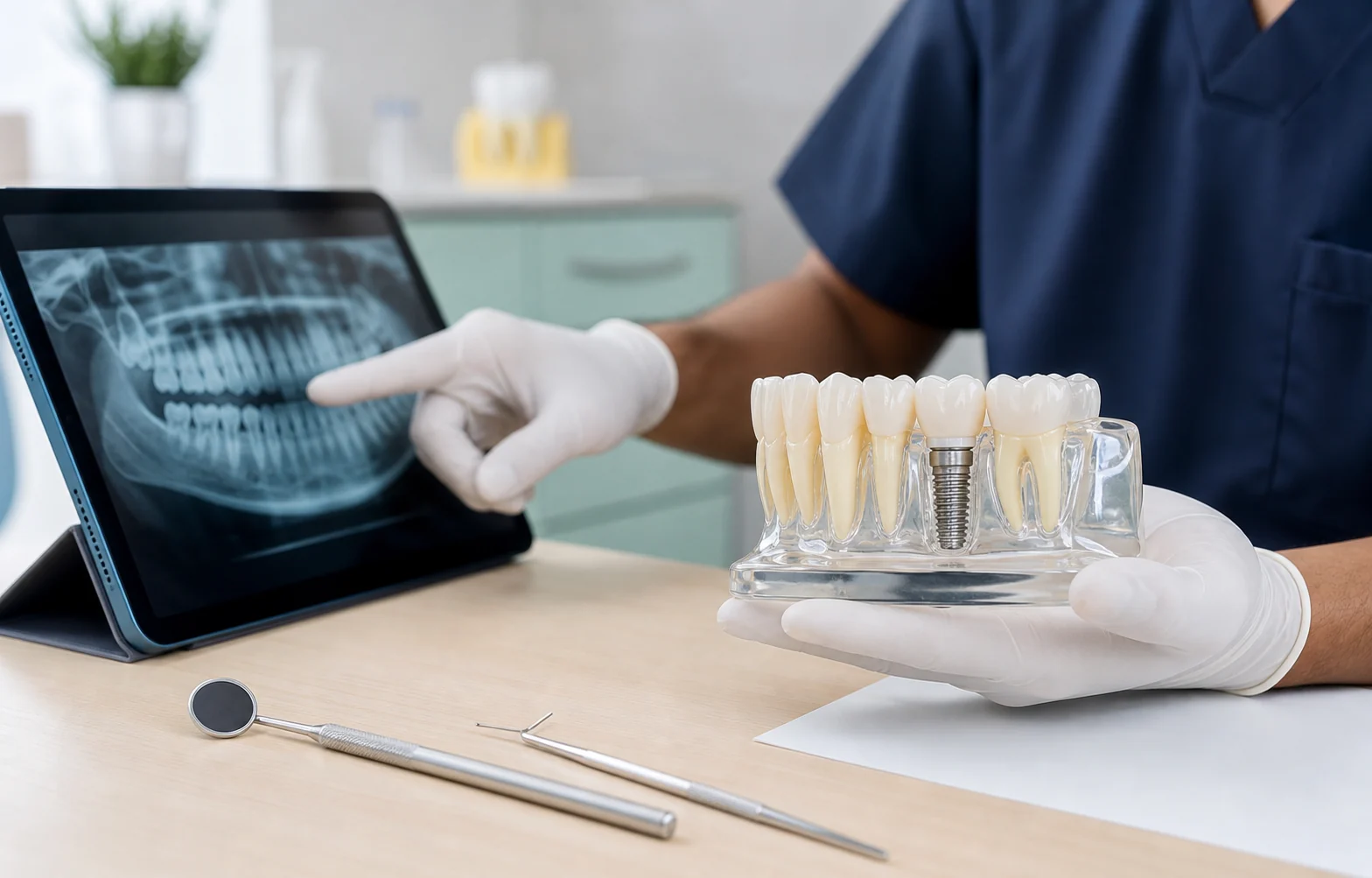
We use rotary endodontic instruments and digital X-rays, so most root canals are completed painlessly in one visit of about 45–60 minutes. A crown is usually recommended afterwards to protect the tooth.
Why patients choose it
- Immediate relief from tooth pain
- Keeps your natural tooth — no gap, no implant needed
- Rotary technology: faster, more precise, less discomfort
- Single-sitting option for most cases
How it works
-
01
Diagnosis
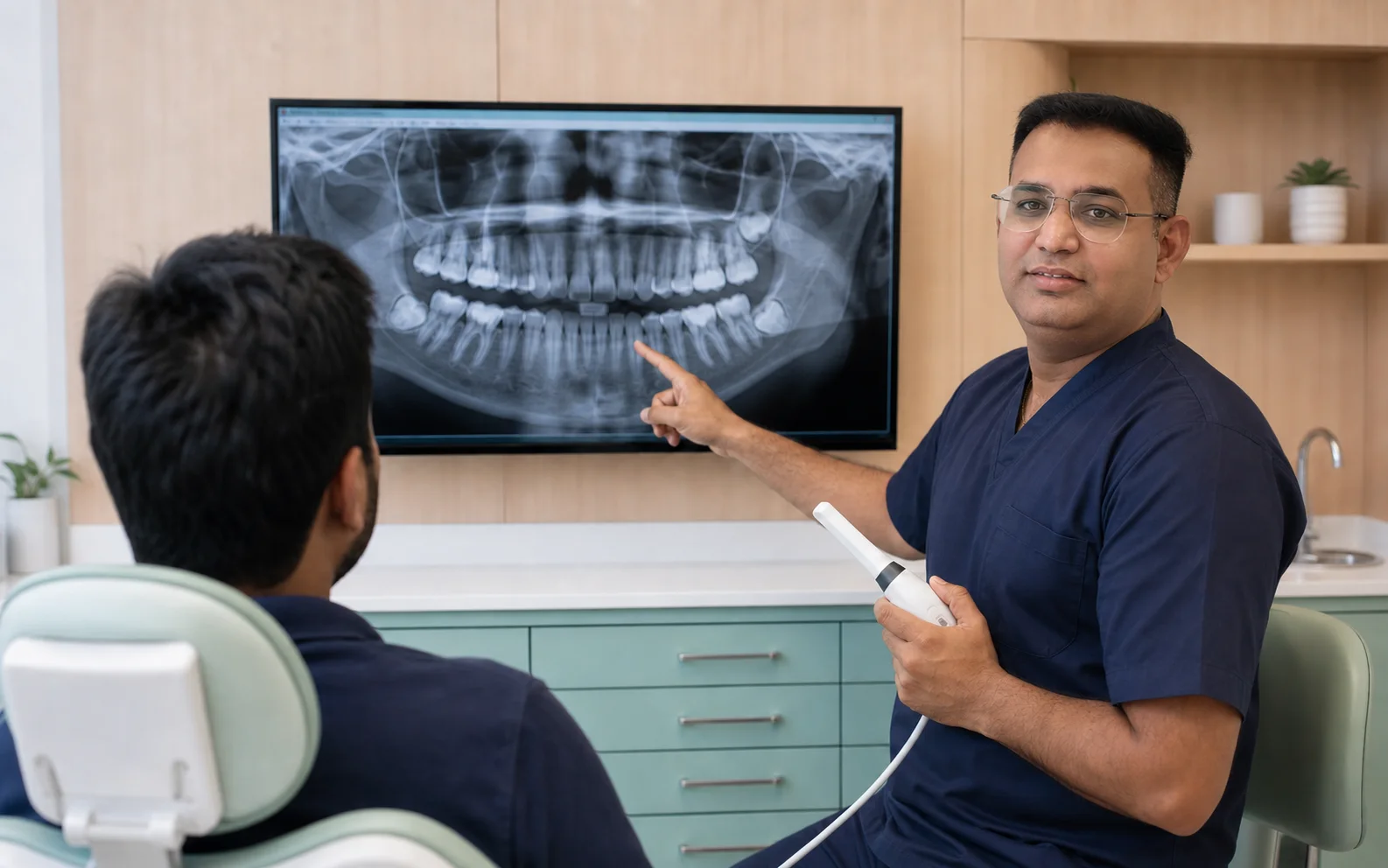
Digital X-ray confirms the infection and how many canals the tooth has.
-
02
Numbing
Local anaesthesia — you feel pressure, not pain.
-
03
Cleaning & shaping
Infected tissue is removed and canals are shaped with rotary files and disinfected.
-
04
Filling & crown
Canals are sealed; a crown is placed to restore strength and appearance.
Common questions
Does a root canal hurt?
Modern root canals are no more uncomfortable than getting a filling. The pain you feel before treatment is the infection — the RCT is what removes it.
Do I really need a crown after RCT?
For back teeth, yes — a treated tooth becomes brittle and a crown prevents it from cracking. Front teeth sometimes need only a filling.
Can I eat after the treatment?
Wait until the numbness wears off (2–3 hours), then eat soft food on the other side until the crown is placed.